
Covent Garden Painters & Decorators
Joinery & timber shopfronts
The painted edges are where a Covent Garden scheme becomes precise. From a shop window’s glazing bars to a cupboard door inside an apartment, the finish should make the existing proportions easy to read.
Discuss your project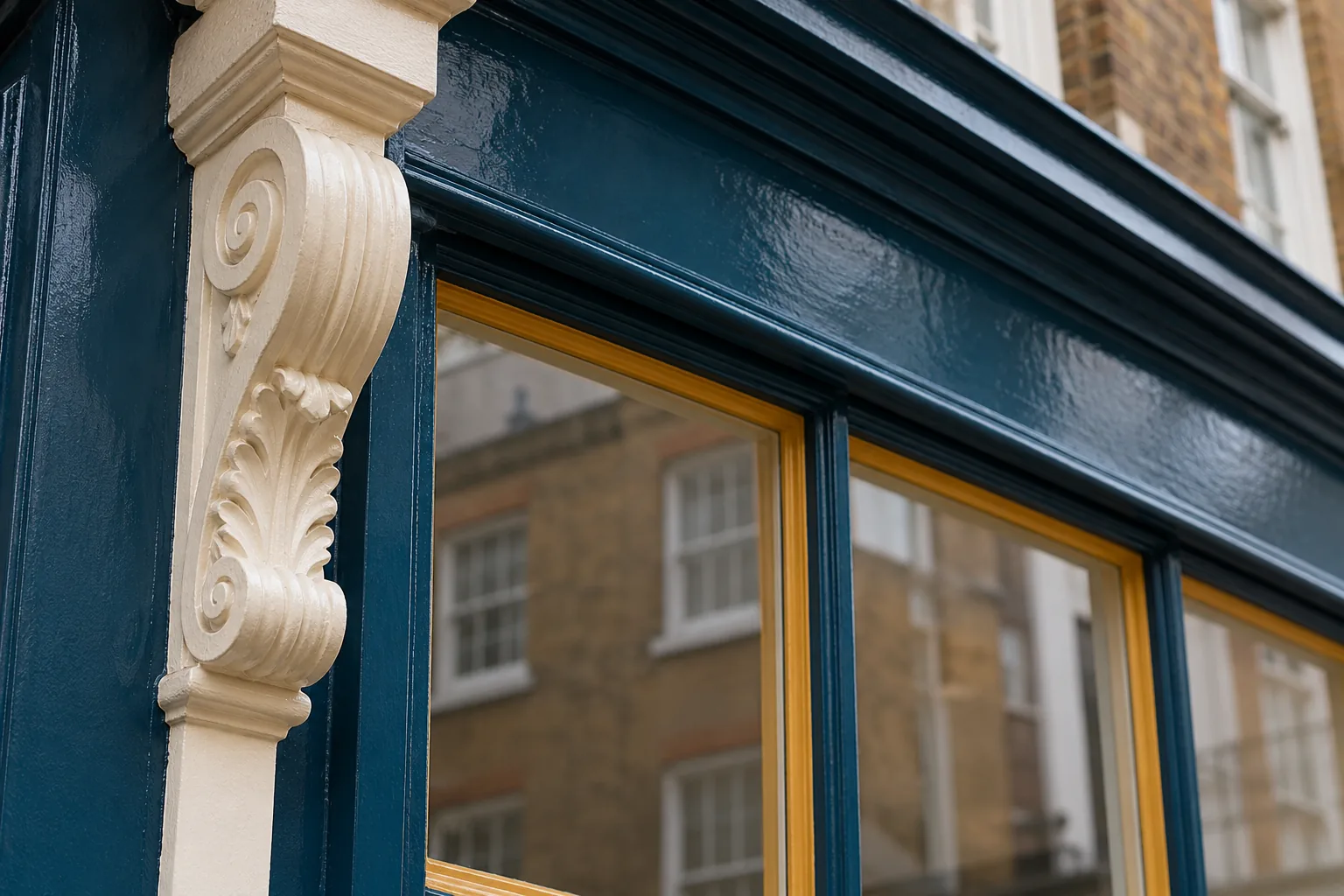
A shopfront belongs to the whole building
The Seven Dials Trust’s study identifies painted timber shopfronts from the late eighteenth and nineteenth centuries and stresses their relationship to the elevation above. A repainting brief should therefore show the upper windows, adjoining entrances and fascia together. Record the existing profiles before discussing colour; a missing moulding or damaged bracket is a repair question, not something a thicker coating will resolve.
Name every component
For a commercial frontage, distinguish the stall riser, pilasters, fascia, console brackets, door and window frame. For domestic joinery, distinguish the visible face, return, shelf edge and inside of a cupboard. Mark retained hardware and glazing on the same schedule. That level of detail makes it possible to compare the requested appearance with the actual preparation, protection and labour in the proposed work.
A good sample includes a profile
Flat colour cards cannot show how a sheen sits on a moulded edge. Where sampling forms part of the commission, agree a suitable trial piece or discreet location and view it under the intended light. Consider the wall finish and surrounding metalwork at the same time. Keep the approved product, colour reference and sheen together so that the final instruction is unambiguous.
Check the sign separately from its painted background
Both councils distinguish advertisement consent from the treatment of a building; listed-building consent can also be relevant to a proposed sign on a listed property. If a repaint coincides with new lettering, illumination or a projecting sign, include those changes in the consent enquiry. Agreement to paint a fascia does not establish permission for every item attached to it.
Sources: Westminster: adverts and signs; Camden: advertisements and signs
Cutting in to mouldings, brackets and glazing bars
Joinery is painted to the profile, not to a flat patch of colour. The Seven Dials Trust’s shopfront study treats glazing, pilasters, the fascia and console brackets as parts of one elevation, which is a useful discipline for domestic joinery as well as a timber frontage. Each arris, quirk and return is prepared on its own: loose coating is taken back to a sound edge, open joints are filled only after the cause of the movement has been noted, and a knot or a stain is brought under a blocking primer before the decorative coats. A thicker film will not restore a missing moulding. Where a section of timber has decayed, that repair is described separately from the paint system so the two are not priced or approved as if they were the same task. Sheen is chosen with the profile in view. A higher sheen can make a glazing bar easier to clean and can also reveal every ripple left by the preparation, while a lower sheen is more forgiving and may mark sooner in a busy entrance. The sample, if one is required, should include a moulded edge under the light the joinery actually receives.
Repainting a shopfront without quietly altering it
A coat of paint and a change to the frontage are different requests, and the brief should say which one is being made. Camden’s Design guidance treats routine redecoration as work that normally does not need planning permission, while a new shopfront or an alteration generally does, and it describes stricter control where the colour of a listed shopfront would change. Westminster’s shopfront guidance ties material, colour, scale and architectural style to the wider street. Those statements are prompts for an address-specific check, not a permission already granted. In the decorating schedule each timber component stays on its own line, with a note of any profile that is damaged or missing. Lettering, a new trough light or a projecting sign is listed apart from the painted ground, because advertisement consent has its own route. The painter’s work stops at the agreed surface. Replacing glass, rebuilding a frame or adding a blind is identified for the right consent and the right trade before anyone treats it as part of an ordinary repaint. Photographs of the whole elevation, taken before preparation, keep that boundary visible.
Sources: Camden: Design planning guidance, 2021; Westminster: shopfronts, blinds and signs guidance
Questions about Joinery & timber shopfronts
What does joinery and shopfront painting include, and what does it leave out?
Joinery and timber shopfront painting is the finish on moulded wood in Covent Garden: stall riser, pilasters, fascia, brackets, door and glazing bars, or cupboard doors, architraves and shelf edges inside a flat. The purpose is to keep the existing proportions easy to read. It does not design a new frontage, apply new lettering or decorate the plaster around the wood. Masonry and railings belong with the exterior service. If a repaint is the moment you also want to alter the frame or the glazing, say so.
How do I separate a shopfront repaint from a sign or an alteration?
Keep a straight recoating of a Covent Garden shopfront separate from any change to the frame, the glazing or the fascia shape. Routine redecoration and a new or altered front are not treated as the same kind of work, and a listed front is examined more strictly than an unlisted one. This page cannot tell you which side of that line your proposal sits on. Send photographs of the whole elevation and say what, if anything, will change besides the coating.
What should I send for a joinery quotation?
Send photographs that show the whole Covent Garden shopfront or the whole run of fitted wood, plus closer views of failed coating, open joints and hardware you want left in place. Name every component you expect to be included, and say which faces of a sash or a cupboard are in scope. If a sheen is already required, include the product reference and where it was viewed. For a flat, note how doors will be used while the work is underway.
How are mouldings and glazing bars coated in practice?
Joinery is coated to the profile, not across it. Arrises and the edge of a glazing bar are cut in so the film does not bridge the detail or flood the glass. Bare or freshly sanded wood is usually primed for that timber, then built up with undercoat and finish, each layer left long enough to take the next. Failed putty or a loose bar should be noted before decoration, because paint will not repair a joint. Hardware is masked or removed by agreement.
Related services
Covent Garden streets for this service
Start with the space
What needs
a new finish?
Tell us whether the work is for a home, a business or a shared building. Include the Covent Garden address, the surfaces involved and the times when access could be available.
Your decorating enquiry
Describe the existing finish, the change you want and any restrictions on working in the space.