
Property & preparation
Colour, shopfronts & conservation
The useful permission question describes a surface and an operation: retaining a colour, changing it, stripping an old coating or painting exposed masonry for the first time. Start there, with the full address.
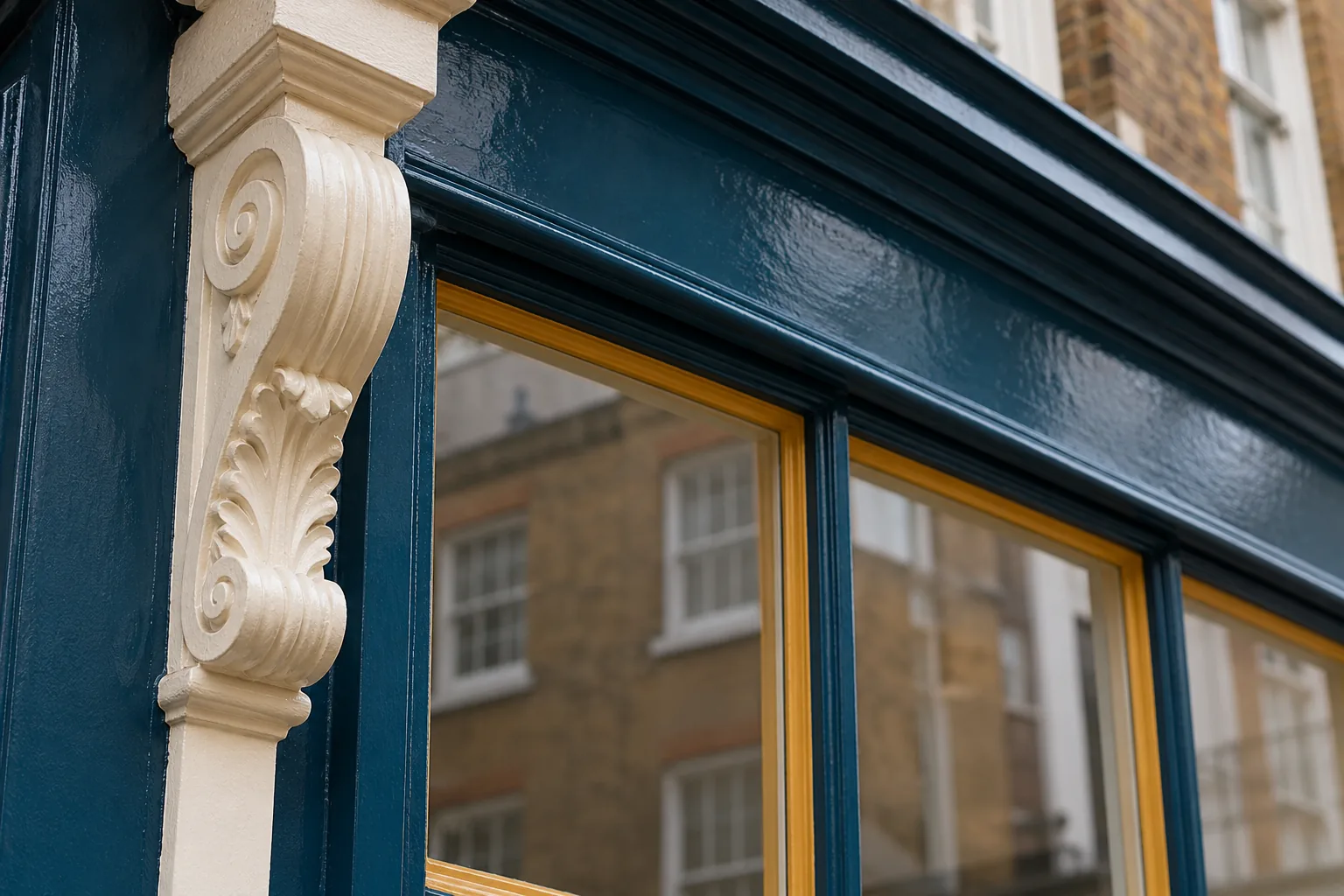
First establish which council and designation apply
Covent Garden extends across Westminster and Camden. Westminster publishes its Covent Garden conservation material; Camden maintains the Seven Dials conservation-area statement. Use the councils’ address maps to establish the relevant boundary, then check listing, planning history and any Article 4 direction. A WC2E, WC2H or WC2B postcode is useful for locating a property, but should not replace that address-specific check.
Sources: Westminster: Covent Garden conservation area leaflet; Westminster: conservation-area checks; Camden: conservation-area checks; Camden: Seven Dials appraisal and management strategy
Describe preparation as well as appearance
Westminster’s consent guidance turns on whether work affects a listed building’s special architectural or historic interest. Camden distinguishes matching maintenance from changes in materials or methods. Supply photographs, the existing and intended finish, and the proposed preparation when seeking advice. A paint-colour name alone leaves out the part of the work that may remove earlier finishes or alter the surface beneath.
Sources: Westminster: listed-building consent; Camden: maintenance of listed buildings
A shopfront repaint and a shopfront alteration are different enquiries
Camden’s 2021 Design guidance says routine redecoration normally does not need planning permission, while new shopfronts and alterations generally do; it identifies stricter controls for colour changes on listed shopfronts. Westminster’s shopfront guidance relates the design to the building and street. Check the proposal in those terms, including repairs, glazing changes, fascia treatment and any new lettering or lighting.
Sources: Camden: Design planning guidance, 2021; Westminster: shopfronts, blinds and signs guidance
Choose a colour from the building’s evidence
Photograph surviving coatings and review any previous consent or landlord finish schedule. Compare proposed samples with the brick, stone, upper windows and adjacent shopfronts. Historic England advises checking local controls and taking account of a terrace’s established colour treatment. There is no single palette in this guide that authorises a frontage: the appropriate colour and sheen depend on the particular building and its requirements.
Do not lose earlier decoration during preparation
Historic England warns that stripping paint or plaster can remove evidence of an interior’s history. If early decoration or a significant retained finish is suspected, obtain appropriate specialist advice before specifying removal. On the working schedule, distinguish ordinary decoration, investigation and any conservation work. Keep decisions and permissions available to everyone responsible for the affected surfaces.
Keep the approvals separate
A landlord’s agreement, the building’s working rules and a council decision answer different questions. Ask the relevant party to confirm the proposed work within its own remit. Advertisement consent also has its own rules, including deemed consent for some signs and additional considerations for listed premises. Record the decisions against the same drawing or surface schedule so a later change can be checked accurately.
Sources: Westminster: adverts and signs; Camden: advertisements and signs
A photograph set a council or landlord can actually read
When you ask about a colour or a preparation, send a set of photographs that shows the operation, not a single close-up of flaking paint. Include the whole elevation or the whole room, then the component in question, then a detail of the existing coating and any earlier scheme still visible in a rebate or under a fitting. Westminster’s listed-building checklist asks for plans, photographs and heritage information where consent is in question. Camden’s maintenance note distinguishes like-for-like upkeep from a change of material or method, so the note that accompanies the pictures should say whether you intend to rub back and recoat, strip to bare timber, or coat a surface that is currently exposed. Label each image with the address, the storey and the element. Put the existing product reference beside the proposed one if you know it, and mark choices that are still open. A colour card photographed on a desk is a weaker record than the same card held against the brick and the upper windows. Keep this set with any previous consent or landlord schedule so the three are read together.
Sources: Westminster: listed-building consent; Camden: maintenance of listed buildings
Pausing a strip-out when earlier decoration may survive
Stripping is a point of no return, so the brief should say who has authority to stop it. Historic England warns that taking off paint or plaster can destroy evidence of how an interior used to be decorated. If a cornice, a shutter rebate or a patch behind a later fitting shows a sequence of colours, leave that patch untouched and ask for advice before the rest of the room is taken back. On the schedule, split ordinary redecoration from investigation and from any conservation treatment. Rubbing down a sound modern coating in a recently fitted kitchen is a different instruction from removing decades of oil paint on a stair. Write the instruction against the component, not as a general line that says prepare throughout. Whoever is on the tools needs the same note the adviser saw, including which rooms are excluded. If the advice is that a specialist should look first, the decorating programme waits for that look. The colour eventually chosen is then recorded against the surviving evidence, rather than against a surface that has already been lost.
Start with the space
What needs
a new finish?
Tell us whether the work is for a home, a business or a shared building. Include the Covent Garden address, the surfaces involved and the times when access could be available.
Your decorating enquiry
Describe the existing finish, the change you want and any restrictions on working in the space.