
Covent Garden Painters & Decorators
Shops, restaurants & offices
A commercial repaint in Covent Garden has to work with the premises as well as the palette. Define the customer-facing surfaces, the rooms behind them and the period in which each part can be released for decoration.
Discuss your project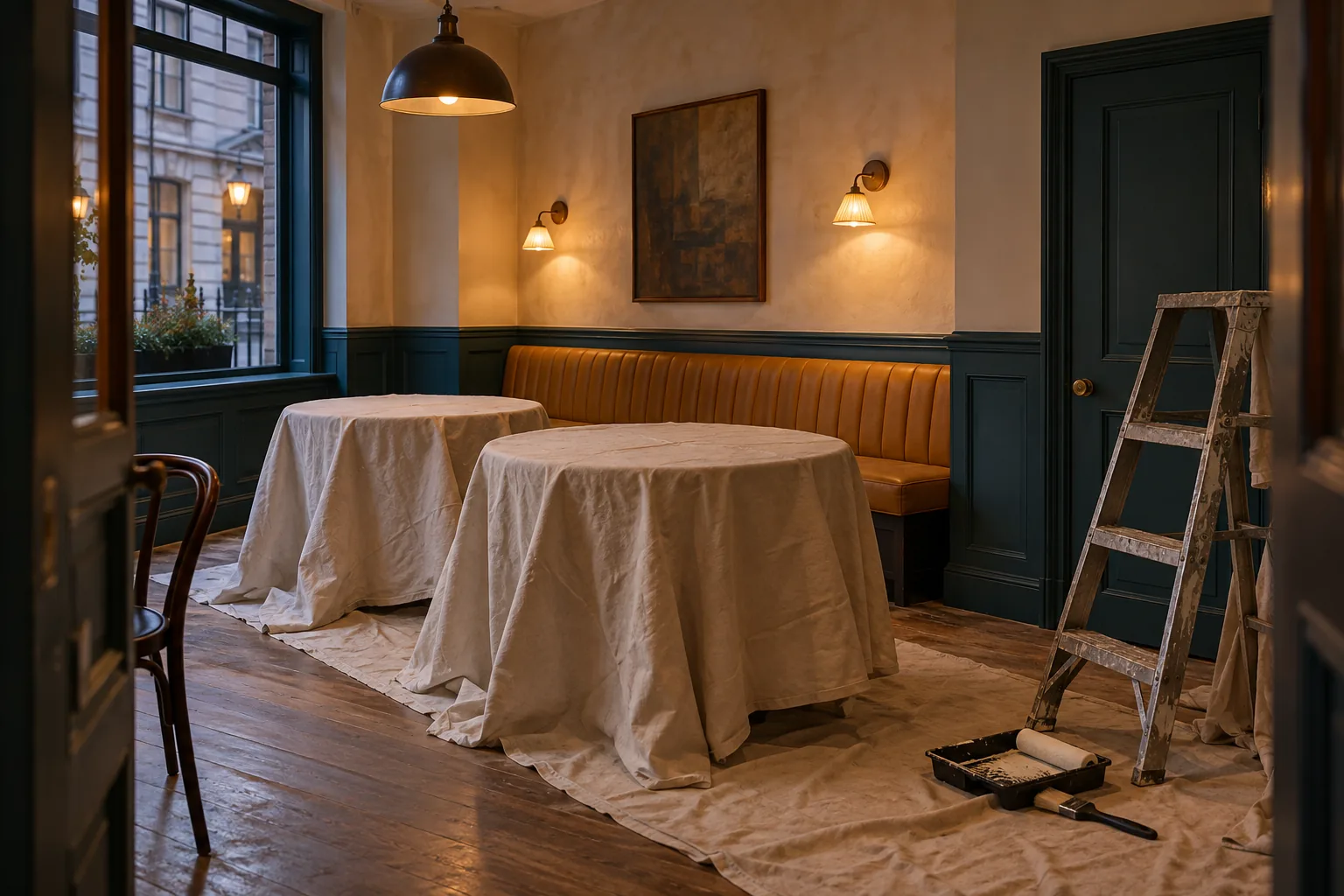
For a shop, follow the customer’s view
Consider the entrance door, display surround, fascia and first internal wall as one sequence. Identify what belongs to the tenant and what needs the landlord’s instruction, including any shared residential entrance. Supply the existing finish schedule where available. Repairs, signage alterations and decoration should be described separately, allowing the right people to approve each part of the frontage.
For a restaurant, plan around the room in use
Mark dining areas, fixed seating, counters and circulation routes on a simple plan. State when furniture can move, what needs protection and whether other contractors will be working. Include cleaning, ventilation and the selected products’ return-to-use requirements in the programme discussion. Agree who checks the premises before customers return; a nominal closing day alone does not describe the available working period.
For an office, define the handover by zone
Identify reception, meeting rooms, open desks and staff areas individually. Confirm arrangements for equipment, documents, alarms and access credentials with the occupier. Where teams remain on site, distinguish the working area from the route they need to use. A room or floor should have a named person able to release it for work and accept it back against the agreed scope.
Discuss evenings and weekends with the actual constraints
Include a request for out-of-hours or weekend work in the enquiry, together with the premises’ permitted hours and the reason for the request. Westminster publishes an approval route for work outside its standard construction hours. The programme needs to account for the relevant council position, building restrictions and neighbouring homes before any alternative shift is agreed.
Protecting stock, tables and a route that must stay open
Commercial decoration is planned around what cannot be moved and what must keep working. In a shop, stock on open rails, a display plinth and the path from the door to the till are identified before dust sheets go down. In a restaurant, fixed banquettes, table tops and the pass to the kitchen need covers that can be taken up quickly if a service still has to run. In an office, screens, cable routes and paper stores are more vulnerable to sanding dust than a bare wall is. Protection is specified for the surfaces being walked on, not only for the wall being painted, and it is renewed when it tears rather than left as a trip. Extract and a controlled sanding tool matter more here than in an empty room, because dust that settles on merchandise or on food-preparation joinery is a trading problem. The brief names a person on the premises who can say, each morning, which zone is released and which route stays open. Other trades in the same room are listed, so decorating does not arrive on a day when a kitchen fitter or a data contractor already owns the space.
Returning a trading zone once the coating will take use
A zone is handed back against a written condition, not against the clock alone. The occupier and the decorator should agree who inspects the finished surfaces, who reinstates shelves, menu rails and socket fronts, and who cleans before customers or staff return. Product information on recoat and return-to-use is read with the ventilation the premises can provide overnight. A low-odour water-borne system may still need air and time. Camden’s Design guidance brings restaurants and other non-retail premises into its shopfront advice, so a dining-room frontage is not assumed to sit outside that guidance simply because it is not a retail shop. Westminster’s shopfront toolkit, published as a practical companion rather than a grant of permission, is a route for thinking about a commercial frontage alongside the planning and conservation material. Any colour or sheen the landlord requires is attached to the handover note by product reference, room by room. Outstanding items are listed in plain language. The premises then holds a record it can use for a later local repair, without reconstructing the original conversation from memory.
Sources: Camden: Design planning guidance, 2021; Westminster: shopfront design toolkit
Questions about Shops, restaurants & offices
What does commercial decorating cover for a Covent Garden shop, restaurant or office?
Commercial decorating covers the surfaces you name in a Covent Garden shop, restaurant or office that has to keep trading or working, and the order in which those surfaces can be released. That may include the customer side of a shop, a dining room or an office zone, with protection of stock, furniture and a route that stays open. It does not choose a colour scheme you have not supplied. It does not replace joinery for a timber front unless you put that front in the same scope.
What stays out of a commercial repaint unless I write it in?
Sign changes, new illumination and alterations to the shopfront stay out of a Covent Garden commercial repaint until you describe them. External masonry and railings stay with the exterior service. Private rooms above the shop stay with interior painting unless the occupier of those rooms is also instructing the work. Moving kitchen equipment and isolating alarms are included only when the brief says who will do them. A time for customers to return is agreed from the products and the zone, not from a wish to reopen.
What should I send for a commercial quotation?
Send the full Covent Garden address, a list or simple plan of zones, and photographs of the surfaces in each zone. State the hours each zone can be released, who will be on site, and who can approve access and the scope. Attach any landlord finish schedule and any rule about deliveries through a customer entrance. If you want evenings or weekends, give the reason and what you already know about permitted hours.
How is a trading area kept usable, and when is a zone handed back?
Keep the area being coated separate from the area still in use, and mark a route for staff or customers in the Covent Garden premises. Stock, tables and a service pass are protected or moved by agreement before dusty preparation starts. Coats follow the product’s recoat interval. A zone is handed back when the film will take the use you described, agreed fittings are back in place, and someone from the premises has looked at the surfaces with the decorator.
Related services
Covent Garden streets for this service
Start with the space
What needs
a new finish?
Tell us whether the work is for a home, a business or a shared building. Include the Covent Garden address, the surfaces involved and the times when access could be available.
Your decorating enquiry
Describe the existing finish, the change you want and any restrictions on working in the space.