
Covent Garden Painters & Decorators
Façades, windows & ironwork
A Covent Garden frontage is a collection of materials, not a single surface. Define the painted windows, doors, masonry and ironwork precisely, then agree how each element should be prepared and finished.
Discuss your project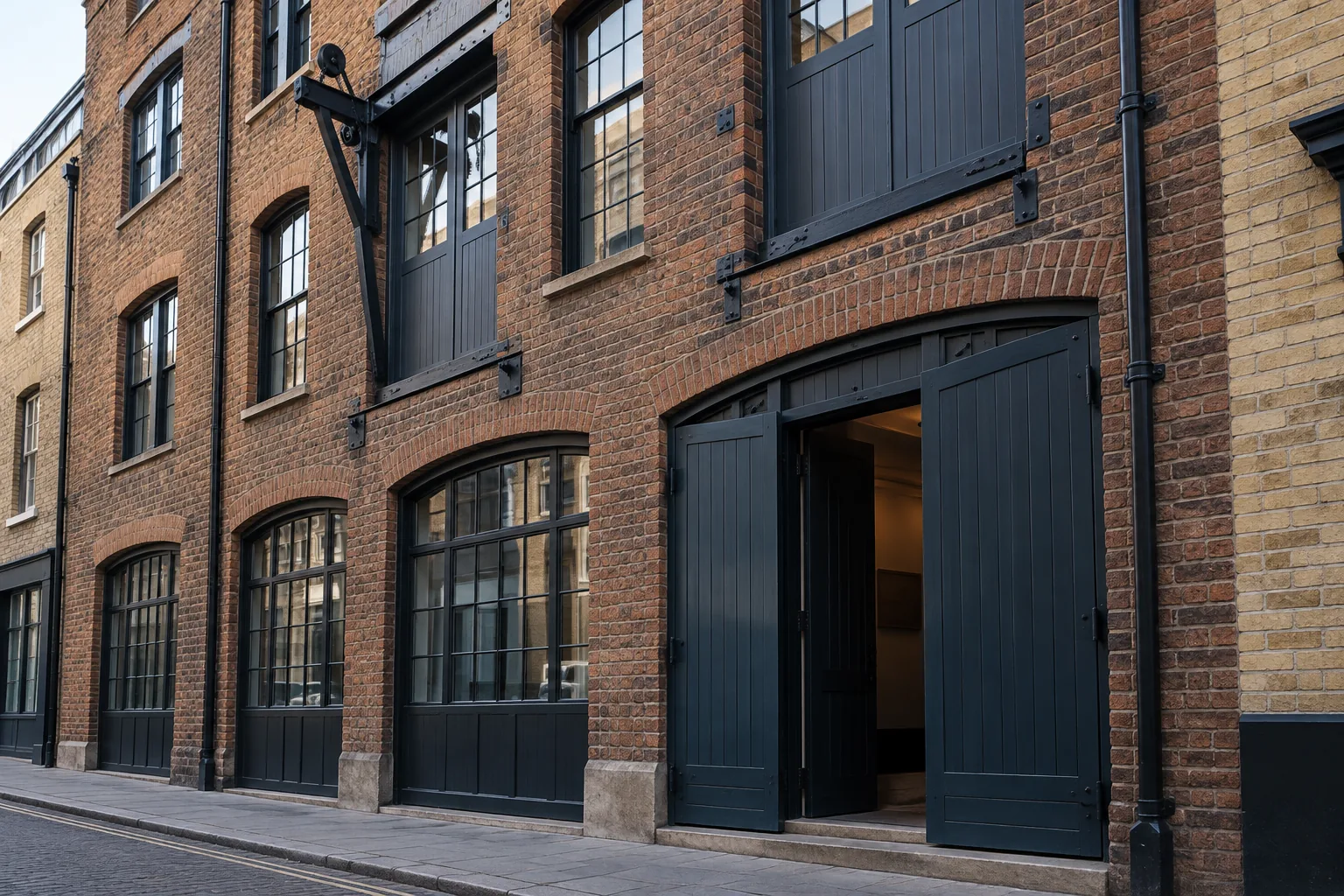
Keep the brick in the picture
Historic England cautions that painting masonry can create moisture problems and that modern coatings may be difficult to remove without damage. For a brick frontage, establish which surfaces have an established painted finish and which remain exposed. Where the history or condition is unclear, seek suitable conservation advice before specifying a coating or a removal method.
Understand the window as working joinery
Record the sash, frame, sill and glazing bars separately. Note existing coating failure, open joints or difficulty operating the window so the enquiry distinguishes decoration from joinery repair. Decide which faces are included and how they will be reached. For a flat, confirm who controls the external finish before a private interior commission extends onto the building’s elevation.
Give metalwork its own treatment
A railing, a basement grille and an old loading-door fitting have different shapes and access needs. Photograph corrosion and fixing points, and identify any repair that must precede painting. Agree preparation, compatible materials and the required finish after assessment. Where metalwork carries historic detail, avoid an instruction that assumes aggressive stripping is appropriate simply because the coating is uneven.
Resolve the pavement footprint
Equipment over a public footway is a separate question from where a van can park. Westminster requires a temporary-structure licence for works encroaching onto or over the highway; Camden uses its building-licence process for scaffolds and related structures. Confirm the council for the address and the proposed access arrangement before setting dates for an exterior commission.
Sources: Westminster: highway structures and safe access; Camden: building licences for scaffolds and structures
Drying windows, recoat intervals and weather on the elevation
Outside work is sequenced around the coating as well as the diary. A primer, an undercoat and a finish each need a surface that is dry enough to take them, and a recoat interval long enough for the previous layer to cure. Shade on a north-facing sash, sun on a top-floor cill and wind in a narrow street change that interval from one elevation to the next. Westminster’s published standard hours for construction run from 8am to 6pm on weekdays and 8am to 1pm on Saturday, with Sunday and bank holidays outside those hours. Camden permits noisy building work without further authorisation in the same weekday and Saturday periods, and requires authorisation outside them. Those rules govern when preparation and other site activity may happen. They do not shorten the time a product needs between coats. If a permitted shift ends before a coat can be recoated, the programme should stop at a complete bay rather than leave a flashing edge overnight. Rain, dew and a cold substrate are reasons to pause, recorded in the brief, rather than inconveniences to be painted through.
Sources: Westminster: out-of-hours working approval; Camden: noisy building works
Masonry, listing and the questions an exterior colour raises
An exterior colour is a proposal about a particular material, and the material decides what must be asked first. Historic England’s redecoration advice warns that a coating on masonry can interfere with moisture leaving the wall, and that removing a coating can harm the fabric. Where brick or stone has never been painted, or where an old coating is failing in patches, the brief should separate a decorative refresh from a first-time coating or a stripping operation, and should seek suitable conservation advice before either is specified. On a listed building, Westminster requires consent for work that affects special architectural or historic interest, and its checklist looks for drawings, photographs and heritage information rather than a colour name alone. Westminster also asks owners to use the address, not a postcode, when checking conservation-area controls and any Article 4 direction. Preparation belongs in that same description: burning off, chemical removal, rubbing back or overcoating are different operations. The agreed record should state which elements are included, which stay as exposed masonry, and which decision is still waiting on the council or a specialist.
Sources: Historic England: historic paint and redecoration; Westminster: listed-building consent; Westminster: conservation-area checks
Questions about Façades, windows & ironwork
What does façade and ironwork painting include in Covent Garden?
Façade, window and ironwork painting in Covent Garden covers masonry, the outer faces of windows and doors, and metal such as railings or a basement grille. Each material is written on its own because weather, existing coatings and access change the work. It does not include a new shopfront, new signage or the rooms inside. Timber on a fascia can be named beside it, but it sits with joinery unless you ask for one combined scope.
How should masonry and metal be described before a coating is chosen?
Photograph each Covent Garden material and say whether it is already painted. An unpainted brick pier should be labelled as unpainted, because a coating can affect moisture leaving masonry and stripping one off can damage the fabric. For iron, show corrosion and the fixings, and say whether a repair has to come before decoration. A railing on a named listed house is evidence only for that house. Your front needs its own note, including any list entry you have found. Products are then agreed against what has actually been seen.
What should I send with an exterior enquiry?
Send the full property address, not only a WC2 postcode, because Westminster and Camden both use the address for conservation areas and Article 4 directions. Include photographs of the whole Covent Garden elevation and of each window face you want included. Say how the upper floors will be reached and whether a scaffold would stand on the pavement. Mention any landlord or estate colour rule. If you believe the building is listed, say what you have read and what is still unchecked.
How do drying and recoats work on an outside elevation?
Outside coats follow the surface as well as the diary. A primer, an undercoat and a finish each need a dry enough face and a gap long enough for the previous layer to take the next. Shade on one sash and sun on a high cill can mean those windows are not ready together. The interval comes from the product and from the weather on that Covent Garden elevation, not from a fixed day count. Noisier preparation may sit inside published construction hours more tightly than quiet finishing.
Related services
Covent Garden streets for this service
Start with the space
What needs
a new finish?
Tell us whether the work is for a home, a business or a shared building. Include the Covent Garden address, the surfaces involved and the times when access could be available.
Your decorating enquiry
Describe the existing finish, the change you want and any restrictions on working in the space.