
Covent Garden Painters & Decorators
Apartment & townhouse interiors
Give the rooms above a Covent Garden street their own atmosphere. A quiet bedroom, a generous warehouse living space and a narrow townhouse stair each need a different balance of colour, texture and finish.
Discuss your project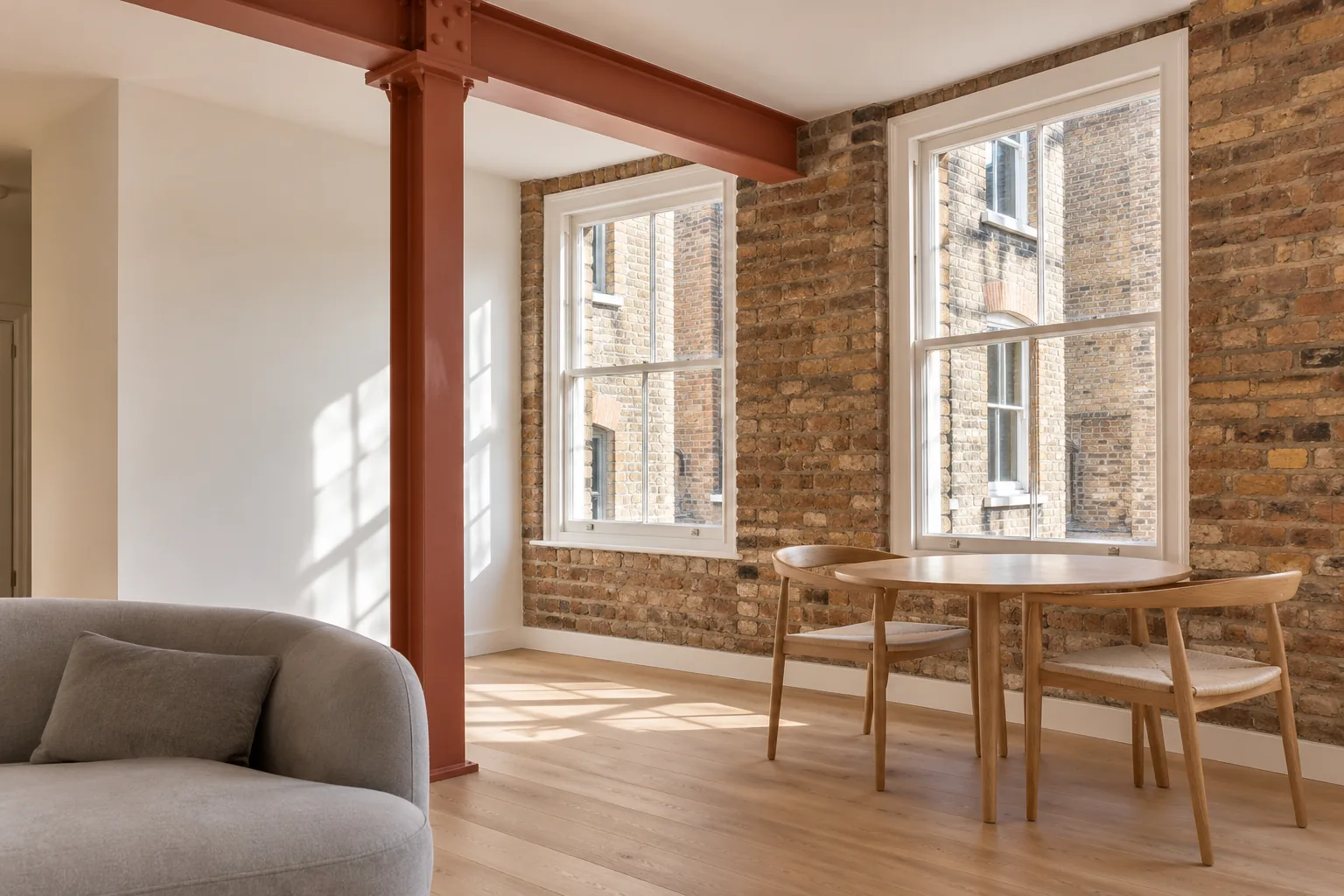
Start with the light you actually live with
Bring samples into the property before committing to a full scheme. Look at them beside the window, beneath the ceiling and in the deeper part of the room. For an open-plan apartment, include the kitchen cabinetry in that assessment; for a townhouse, follow the view up the stair. Record the effect under the lamps you use after dark as well as in daylight.
Separate the backgrounds before choosing the coating
An exposed brick pier, a new plasterboard partition and an older plaster ceiling should appear as separate entries in the brief. Identify surfaces that are to remain visible, repairs undertaken by others and any marks with an unresolved cause. The decorating specification can then describe preparation and paint for each background, with investigation or repair agreed before finishing proceeds.
Let the room list include the awkward parts
A radiator recess, the wall behind shelving and the ceiling over a fixed wardrobe can disappear from a simple room count. Walk the proposed scope and mark these elements explicitly. Include access to tall windows, the inner faces of shutters where present and any fittings that need removal. The same record should identify furniture that cannot leave the room and the protection required around it.
Make an occupied flat workable
Describe how the household uses the property during the week, including home working and overnight occupation. Agree an order that keeps the necessary rooms and routes available. Ask the building manager about material deliveries, lift protection and permitted hours, then include those instructions with the enquiry. Access through a shop, a shared hall or a separate residential door needs to be understood before the programme is settled.
Preparing plaster, board and brick before any colour
Name every background before a colour is chosen. Older plaster, a plasterboard lining, a previously painted ceiling and brick meant to stay exposed need different preparation, even when they meet on one wall. Westminster’s Covent Garden conservation-area leaflet records mixed residential, office, restaurant and retail uses, and it describes both the older street pattern around the Piazza and Victorian warehouses on Long Acre and along Floral Street and Shelton Street. An interior brief here can therefore pass from a domestic room into a former warehouse space within one address. Powdery emulsion is cleaned and rubbed down before an adhesion or stain-blocking primer is considered. Hard gloss on joinery is keyed so the next coat has something to grip. New skim is left to dry, then mist-coated where the supplier of the finishing paint asks for that step. A mark that may be damp is written down and kept out of the decorative specification until its cause has been investigated. Sanding dust is collected at the machine and the doorway is sealed, because the landing, and often a business below, stays in use throughout.
Sources: Westminster: Covent Garden conservation area leaflet
Coat order, wet edges and when a room can be used again
Settle the order of coats while the rooms are still empty of wet paint. Ceilings are usually brought to a finish before the walls, so later cutting-in can hide the roller edge, and joinery is often left until the wall colour is settled so the boundary can be cut to a clean line. A broad warehouse wall may have to be worked in bays from a pier or a corner, otherwise a lap flashes as it dries. Eggshell on wood and a flat emulsion on plaster can ask for different recoat intervals. Those intervals belong in the brief next to the ventilation the room can truly offer, including a courtyard window that may or may not stay open overnight. Floors are covered along the routes people will walk, switches and ironmongery are masked, and any furniture that remains is moved clear of the wall being coated. A room is fit for occupation when the coating will tolerate the contact that the household actually makes with it. That moment can arrive later than the point at which the surface merely looks touch-dry, so the programme should say so beside each room.
Questions about Apartment & townhouse interiors
What does interior painting in a Covent Garden flat include?
Interior painting in a Covent Garden flat covers ceilings, walls and how the household keeps using those rooms. Name plaster, lining board and any brick that should stay exposed. A wallcovering, the outside of the windows and a timber shopfront are separate services. Doors and skirtings are joinery unless your room list includes them. Write damp, or a crack with no known cause, apart from ordinary preparation.
How should I describe preparation in a lived-in flat?
Say what is already on each surface in the Covent Garden flat and what must stay untouched. Painted plaster, a new lining and an exposed pier are different backgrounds even on one wall. Note repairs that someone else will do. If shelves or a fitted wardrobe stay, point out the wall and ceiling hidden behind them. Tall windows, and shutter linings where they exist, need a note on how they will be reached. Included preparation is fixed in the quotation, after the rooms have been seen.
What should I send so an interior quotation can be checked?
Send the full Covent Garden address, the floor and the door materials will use, including a stair shared with a shop. List each room and the surfaces in it, with photographs of the whole room and of damage you want considered. Say whether colours are chosen or still open, and attach a landlord schedule if the lease has one. Mention home working, overnight use and any house rule on deliveries or hours. If paper, external windows or the shop below are also wanted, name those services in the same message.
How can rooms stay usable while a flat is painted?
Say which rooms and routes a Covent Garden household needs each night, and which can be released for a run of coats. Ceilings are often taken forward before walls, so a later cut line can tidy the edge, and joinery is often left until the wall colour is settled. A further coat waits until the previous film will accept it. That gap depends on the product, the thickness and the ventilation, so it is agreed for these rooms rather than copied from another flat.
Related services
Covent Garden streets for this service
Start with the space
What needs
a new finish?
Tell us whether the work is for a home, a business or a shared building. Include the Covent Garden address, the surfaces involved and the times when access could be available.
Your decorating enquiry
Describe the existing finish, the change you want and any restrictions on working in the space.